When we moved to Dakar I was so proud to tell people I was moving to Africa. I would be answering the call of righteous men who had pointed my generation in the direction of a continent where you did not have to compromise, where one’s dignity would be automatically restored. A land where black people were kings and queens before being captured by “the white man”.
I grew up in Reston Virginia, just outside of Washington DC. My mother is black and my father is white but a DNA test would force me to examine the idiocy of American race politics and reflect on my own identity. Although my mother’s ancestry can be traced to Cameroon, including a scattering of other West African countries, the percent of African blood in my veins is far less than I led my soulful self to believe during the years leading up to my journey to Africa. But as is the American way, we insist on making ourselves sick, unable to cure our preoccupation with race and color, it’s an obsession that forces us to uphold the status quo, avoiding the obvious, uncomfortably negotiating our daily interactions with polite smiles and fake laughs, side stepping a truth hidden in plain sight. So like most Americans, at a young age, I learned to racially identify, thereby categorizing myself, accepting unwritten coded expectations, both positive and negative.
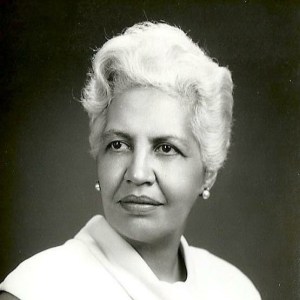
My grandmother was a beautiful woman of color, she did not feel a need to talk much, she was at peace with herself and silently expected the same from others. I can remember that she liked to live comfortably, that she was always learning new things and that she was unapologetically black. She would do whatever she could to help you, no matter who you were, thereby announcing to the world that it would NOT be her color but her compassion that would define her.
She kept a world map on her wall marked with all the places she had visited in her lifetime. There were push pins scattered across the islands in the middle of the oceans and on the mainlands of the continents. It was as though someone had blindly thrown a fist full of the pins at the map not caring where they pierced the cork-board holding it up, leaving one to try to decipher a non existing pattern of the brightly colored plastic dots. It hung as a banner of how she lived on this earth, borders were man made lines that would not limit her. My grandmother’s influence was my medicine, alleviating me of the pains created by a system that confines the soul, breaking us down to the most basic definition of ourselves. She would be the inspiration I’d draw from the moment we moved and the instant I picked up a pen in attempt to write my own narrative, void of any definable boundaries or predictable patterns.
Africa quickly teaches you that it has no intention of conforming to you, that you must conform to it. It has never been a place where the narrative of the foreigner blends neatly into the backdrop. It is a place where new comers who think that the world should conspire to accommodate them are met by a spirit residing the land. A spirit that is unimpressed by humanity, having birthed nations that predate western institutional thought, a spirit that invalidates the degrees of those who think they are defined by them. A place that would demand that I reexamine what it meant to live here, what it means to be human.
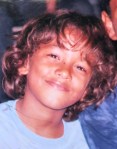
The moment that would change me forever came when I expected it least. We had purchased a Peugeot 405, a car not built for sub Saharan Africa, a colonial relic left behind as a symbol of French influence. I was riding with my wife and 3 children, the youngest having been born since we arrived in Senegal. Edou innocently turned to me to ask how I felt being the only white person in our family? Wait! What!? Who? What in the world….? For him, having been born here, black was black, the idea of me being a man of color was ridiculous. We were in a land where the president is black, the government officials are black, lawyers, doctors, policemen, and military personal are all black Africans. How could he possibly see me as anything close to black surrounded by so many hues of brown? I gripped the steering wheel, pulled over, turned around to face this 4 year old who dare call his great grandmother’s youngest grandson white. I looked at his brother and sister sitting silently with their faces turned to hide their expressions. I glanced at my wife, looking sheepish, as if a 15 year joke that she had been waiting to hear had finally been told. I looked back at Edou, nothing but pure innocence in his eyes, sincerely concerned for his father and my feelings as a “white man”. Despite trying to put on my best angry father face to educate my youngest son and the overly amused members of my family of my true identity, of how I was a man of color, I could do nothing but laugh louder than I had in a very long time…..
This was not how this was supposed to end! I did not come all the way to Africa in search of my destiny only to be called a white man by my own son. How could this be? That’s when I understood the true lesson this continent had taught me. Only after living outside of the U.S. for some years could I see my hand in front of my face, how racism traumatizes the human psyche, regardless of the color of your skin. Living in a black country had set me free, not from a slave hold but from the prison of myself, built into my mind as an American. Africa took me in and pushed me to rethink who I was, to release years of anxiety and inspire me to write my own story.
To my dear grandmother Lenora Young. May you rest in peace but may your legacy live on, We miss you….

 American Immigrant in Africa
Great read, love that how does it feel to be white story 😀
LikeLike